Presentations

FMA Asia Pacific; FMA ×2; University of Massachusetts, Amherst†; Harvard Law School†; Northeastern University†; Modern Risk Society (MRS) International Risk Conference†; MFA; California State University, Fullerton

Boca Finance and Real Estate Conference; Chapman University†; Telfer Conference on Corporate Finance and Banking†

Boca Corporate Finance and Governance Conference ×2; Montclair State University; California State University, Fullerton; Conference on Empirical Legal Studies; FMA ×3; University of Missouri

Boca Corporate Finance and Governance Conference; University of Alabama†; University of Missouri ×2

SFA; World Finance Conference; Crowell Prize Competition; AFA; University of Miami Winter Conference on Machine Learning and Business

University of Missouri

† marks a presentation by a coauthor.

× denotes multiple presentations at the same conference.
Working Papers

Working Paper2024

Homeownership as Life Cycle Goldmine: Evidence from Macrohistory

with Shize Li and Jialu Shen

Optimal Life Cycle Homeownership Strategy
Household Age Profile over the Life Cycle

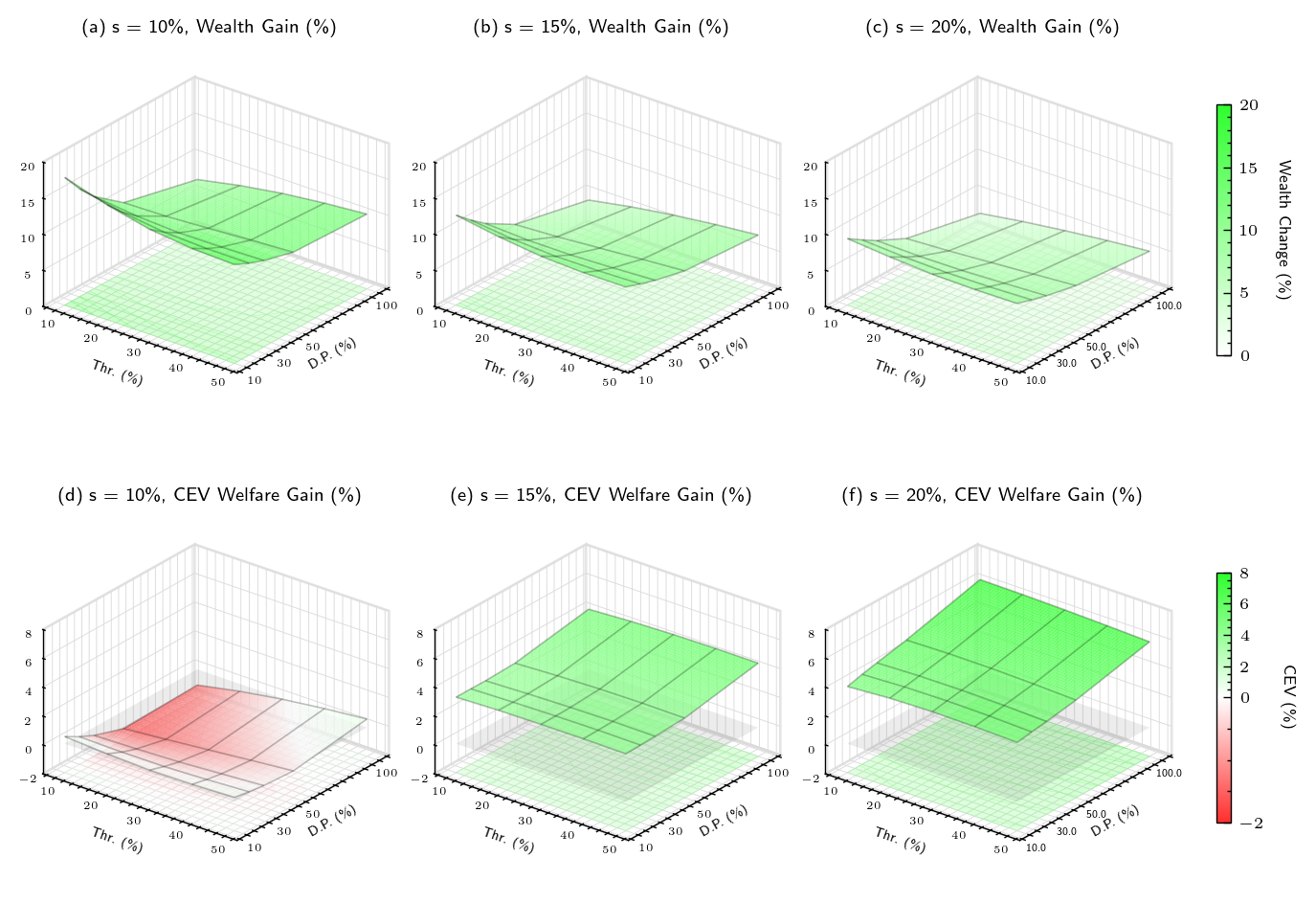
Should households buy their homes? Contrary to popular expert advice, our block-bootstrap life-cycle simulation provides an affirmative answer. Homeownership generates wealth and welfare gains relative to rent-for-life benchmarks that invest only in financial assets. It lowers household portfolio downside risk and improves retirement consumption and bequest outcomes. The gains reflect risk aversion, intertemporal substitution, leverage-induced trade-offs between consumption and the timing of home purchases, and the liquidity costs of homeownership. Their magnitude varies across labor income profiles, house price environments, and mortgage rates. Our findings suggest that homeownership can build wealth more effectively than common portfolio strategies, including all-equity portfolios.

Working Paper2023

The Role of Growth Strategies in Acquisitions

with Fred Bereskin, Micah Officer, and Jing Wang

Skill Demand Similarity for Actual Deals and Pseudo Deals
Skill Demand Similarity and Human Capital Relatedness

Using labor skill demand disclosed in job postings as a proxy for firms' growth strategies, we find that similar growth strategies increase the likelihood of two firms merging. In particular, a firm is more likely to become a target as its labor skill demand becomes more similar to that of its potential acquirer. Similar growth strategies ameliorate post-merger integration challenges in facilitating merger deals. Following the merger, the combined firm continues hiring the same skills, consistent with the growth strategy persisting. These types of mergers experience more synergies and superior operating performance.

Working Paper2022

Are Short Sellers the Vanguards of SEC Investigations?

with Xiaohu Guo, Inder K. Khurana, and Ruixiang Wang

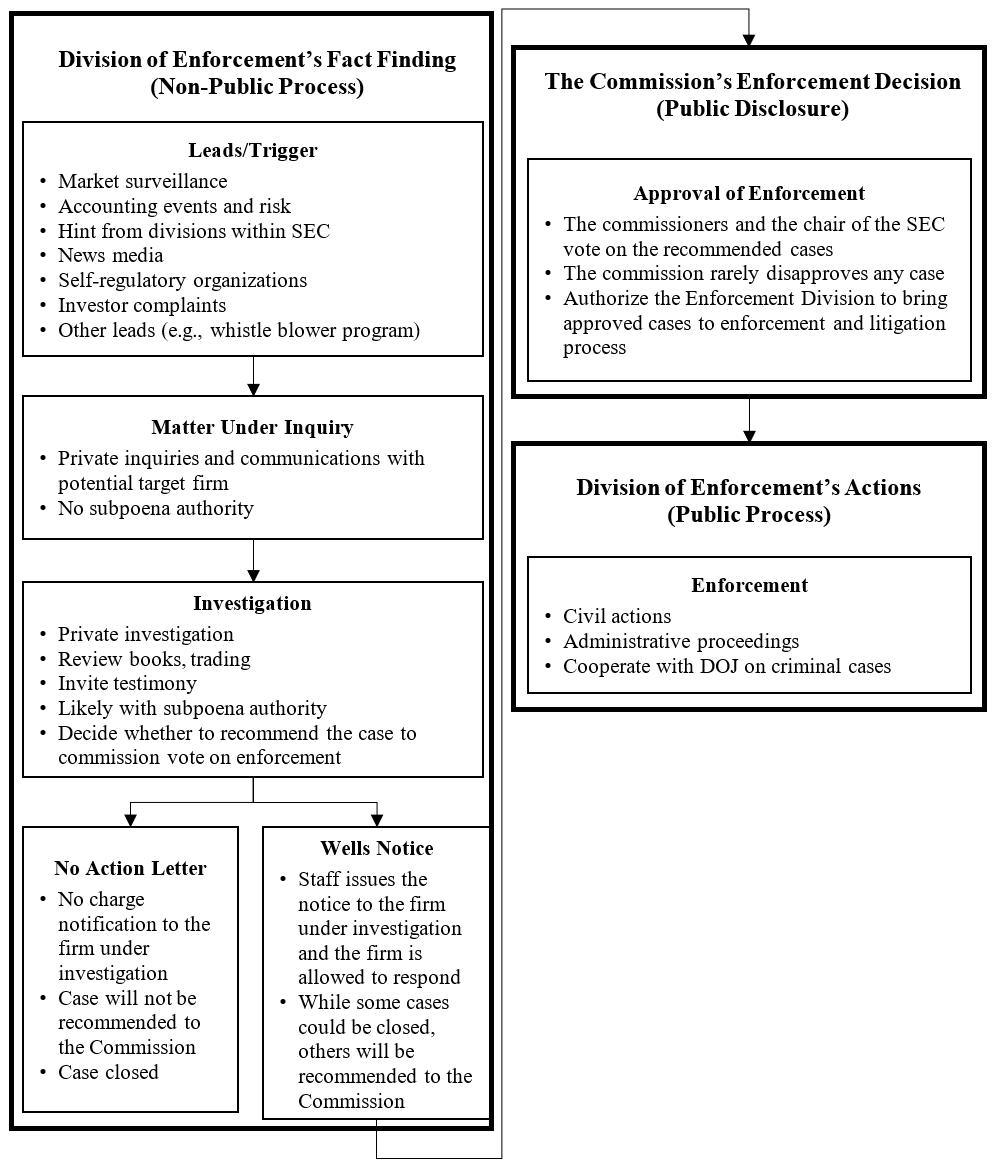
This paper investigates whether and how short sellers influence the U.S. Securities and Exchange Commission's (SEC) decision to initiate investigations. We find that higher short interest is significantly associated with an increased likelihood of SEC investigations, suggesting that the SEC relies on short sellers as information intermediaries in its enforcement process. Further analyses reveal that this relation is more pronounced when the SEC's fraud detection capacity is constrained or when firm-level information uncertainty is high.

Working Paper2022

Does the SEC's Enforcement Vary Depending on Boards' Gender Composition

with Fred Bereskin, Xiaohu Guo, and Miriam Schwartz-Ziv

Best Paper Award ($300) · Boca Corporate Finance and Governance Conference · 2022

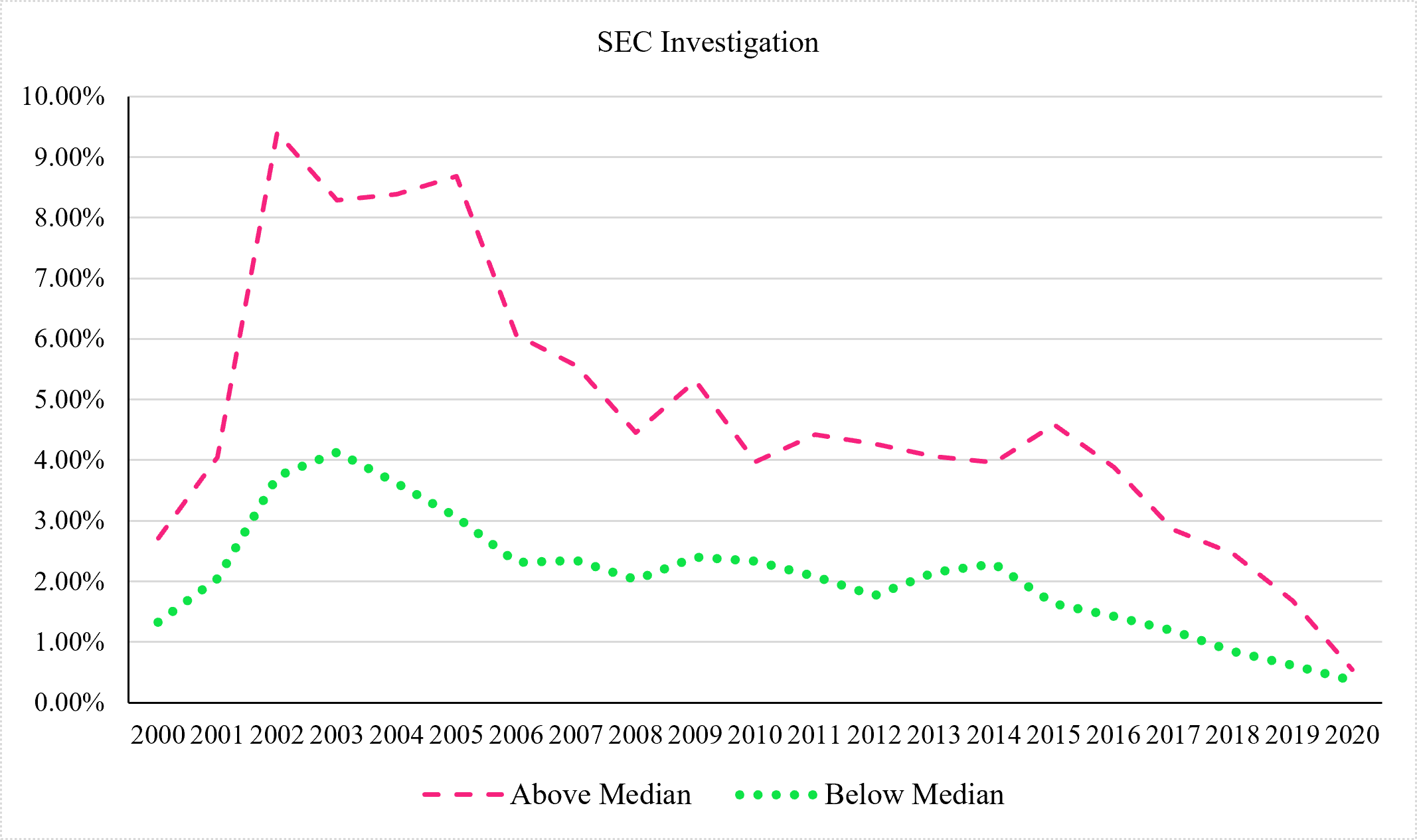
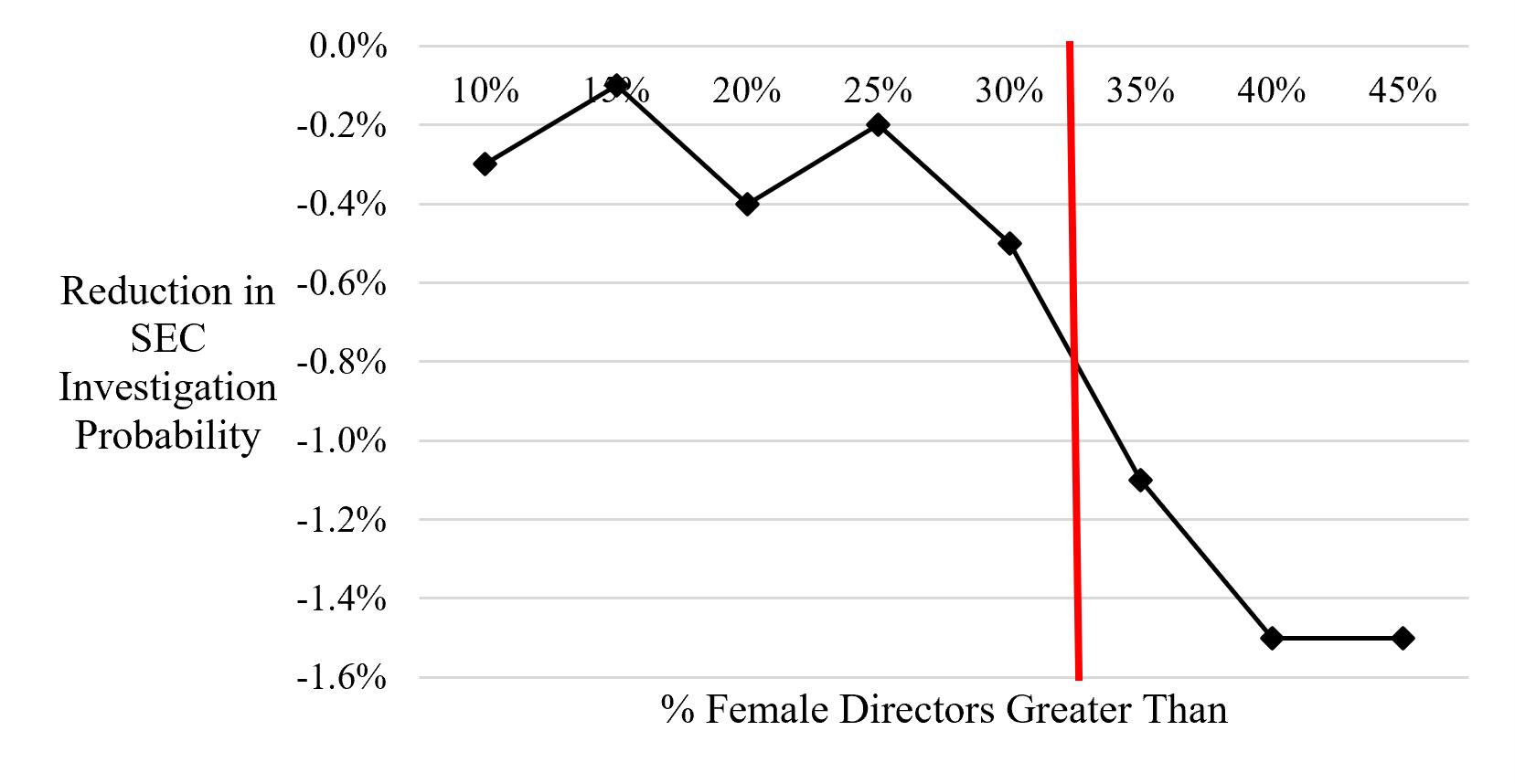
The SEC has limited resources that it can dedicate to investigating firms. Which type of firm is the SEC more likely to suspect of potential wrongdoing? We show that firms receiving a "red flag" for misconduct (e.g. comment letters, restatements, whistleblower reports) are less likely to experience an SEC investigation if they have a large fraction of women directors. These firms are also less likely to experience enforcement by the SEC. We address endogeneity by showing that these results are particularly pronounced when the US government changes to a Democratic administration from a Republican administration. Results are particularly large among smaller firms for which public information is more limited.

Working Paper2022

Patrolling the Securities Laws: Towards the SEC's Investigation of Founder-CEO Firms

with Inder K. Khurana and Ruixiang Wang

Best Paper Award Semifinalist · FMA Annual Meeting · 2023

Using hand-collected data on founder CEOs and SEC investigations obtained via the Freedom of Information Act, we find that founder-CEO firms are 29% more likely to face SEC investigations, yet these investigations rarely lead to accounting and auditing release enforcement actions. CEO attributes—power, risk-taking, and visibility—drive this heightened scrutiny, reflecting the SEC's use of academically motivated variables and fraud-deterrent strategies.

Working Paper2020

Machine Learning Classification and Portfolio Allocation: with Implications from Machine Uncertainty

with Kuntara Pukthuanthong

Crowell Prize (Third Prize: $2,000) · PanAgora Asset Management · 2021

We use multi-class machine learning classifiers to identify the stocks that outperform or underperform other stocks. The resulting long-short portfolios achieve annual Sharpe ratios of 1.67 (value-weighted) and 3.35 (equal-weighted), with annual alphas ranging from 29% to 48%. These results persist after controlling for machine learning regressions and remain robust among large-cap stocks. Machine uncertainty, as measured by predicted probabilities, impairs the prediction performance. Stocks with higher machine uncertainty experience lower returns, particularly when human proxies of information uncertainty align with machine uncertainty.

Work in Progress

Work in Progress

150 Years of Return Predictability Around the World: A Holistic View Across Assets

Campbell and Shiller (1988) show that if payout growth is not predictable, the payout-price ratio must predict returns. Using 150-year data from 16 developed countries across bond, equity, and housing markets, I study this implication using payout-price ratios (coupon price, dividend price, rent price). None of the 48 country-asset combinations shows consistent in-sample and out-of-sample performance with positive utility gain for the mean-variance investor. However, 14 (5) countries have predictable payout growth in the equity (housing) markets.

Dormant Work

Dormant Work

Firm Social Network and SEC Enforcement

with Fred Bereskin and Adam Yore

We construct firm-level social network using partnership relations. Systematically important firms—firms that are highly connected and of greater centrality—face more SEC scrutiny across different enforcement actions, including AAER actions and SEC investigations. Our findings remain robust when applying stacked difference-in-differences analyses that leverage exogenous firm-level reductions in network sizes within corresponding Louvain communities, driven by mergers and acquisitions.